


Perimenopause & Menopause Coaching in Greenville, SC
You're sleeping badly, waking up hot at 3 a.m., snapping at people you love, and the weight is settling around your middle no matter what you eat. Maybe you were told "it's just your age." Perimenopause is a normal life transition, not a disease, but you don't have to white-knuckle your way through it. I help you understand what's changing and build the foundations that make this decade feel like yours again.
Book Your Free Wellness Clarity Call30 minutes · In person in Greenville or virtual · Se habla español
Does this sound familiar?
- Hot flashes or night sweats, especially at night or under stress
- Waking at 2 or 3 a.m. and not getting back to sleep
- Cycles that are suddenly shorter, heavier, longer or skipped
- Anxiety, irritability or low mood you don't recognize in yourself
- Brain fog and forgetting words mid-sentence
- Belly weight that doesn't respond to what used to work
- Joint aches, low libido, vaginal dryness or more bloating
What's actually happening in perimenopause
Menopause is one day: 12 months after your last period, on average around age 52. Perimenopause is the years leading up to it, often starting in your early to mid-40s and lasting anywhere from a few months to several years.
There isn't one fixed order. For many women progesterone falls first: ovulation becomes less regular, and progesterone is only made after you ovulate. Estrogen can stay normal or even run higher, so with less progesterone to balance it you get estrogen dominance: heavier periods, breast tenderness, worse PMS, anxiety and lighter sleep. Because your periods keep coming, those signs can hide perimenopause for years. For other women estrogen swings or drops sooner, and hot flashes and night sweats show up first. That's why we test instead of guessing.
Menopause beyond the ovaries
Menopause isn't just your ovaries retiring. As they wind down, your adrenal glands and body fat become the backup makers of sex hormones, and the rest of your body reorganizes around that change. In my Hormone Dance Method, sex hormones come at the end of the chain: your body puts survival first, so stress and blood sugar set the stage, your thyroid keeps the rhythm, and only then can estrogen, progesterone and testosterone find their balance. That's why we look at:
- Adrenals and stress. Your adrenals now carry more of the hormone load, so chronic stress, under-eating and poor sleep hit harder. Stress hormones fuel hot flashes, 3 a.m. wake-ups and cravings.
- Blood sugar and insulin. Insulin sensitivity tends to drop, which makes belly weight and cravings more likely, and blood sugar dips can set off hot flashes.
- Brain chemistry. Your brain's thermostat relies on serotonin and other messengers. That's why hot flashes feel so sudden, and why mood, sleep and memory shift too.
- Thyroid. Fatigue, weight gain, brain fog and low mood overlap with thyroid problems, which are common at this age. Every program includes a full thyroid panel so we can look. Thyroid & Hashimoto's →
- Gut and liver. They clear used estrogen. Constipation and an imbalanced microbiome can send more of it back into circulation. Gut health →
- Muscle, bone and metabolism. A large study following women through this transition found fat gain roughly doubled and lean muscle started to decline as perimenopause began, until about two years after the final period. It's physiology, not a lack of willpower, and protein and strength training matter more than ever.
Not sure about hormone therapy?
Many women come to me hesitant about hormone therapy: worried by what they've read, with a family history of breast cancer, or taking an estrogen blocker after cancer. We're not against hormone therapy, and for many women it's a good choice. But our approach is mostly natural, and you have real options either way:
- Targeted, non-hormonal support for hot flashes, including plant extracts studied to act on estrogen receptors without being hormones.
- Calming the stress response and brain chemistry behind hot flashes and night waking, with sleep, breathing, nutrition and carefully chosen calming nutrients or adaptogens.
- Steady blood sugar, since dips and spikes are common hot-flash triggers.
- Vaginal dryness and comfort: non-hormonal moisturizers and lubricants.
- Mild over-the-counter bioidentical options, such as low-dose topical hormone creams and vaginal suppositories, available through our dispensary for women who want gentle hormone support and whose doctor agrees.
- Helping your body clear estrogen through the gut and liver.
If you've had breast cancer or take an estrogen blocker such as tamoxifen or an aromatase inhibitor, every option is chosen with your oncologist's okay.
How we work on it together
Free Wellness Clarity Call (30 minutes)
We talk about what's going on and whether my approach fits.
90-Day Whole Systems Optimization Plan
It starts with an in-depth Gameplan Session, then coaching every two weeks with my Hormone Dance Method.
For perimenopause and menopause that usually means:
- Protein at every meal and steadier blood sugar, so energy, cravings and night waking settle.
- Strength training two or three times a week to protect muscle, bone and insulin sensitivity.
- Sleep and stress work, because your adrenals now carry more of the hormone load.
- Gut support and regular digestion, so used estrogen leaves your body.
- Fewer, targeted supplements only when they fit, checked against your medications.
- Small, doable actions tracked week to week, not a 10-page protocol.
Lab testing in Greenville
Every program includes the Splendhealth Complete Panel: a full thyroid panel plus HbA1c, lipids, vitamin D, CRP, a metabolic panel and a complete blood count. When it would change the plan, the DUTCH hormone test shows how you make and clear estrogen, progesterone and cortisol, available at direct lab cost with no markup. Results are for education and planning, not diagnosis. Share them with your doctor too.
Working with your doctor, and hormone therapy
I don't diagnose or prescribe, and I never start, stop or change hormone therapy or other medications. I don't offer hormone pellets, prescription hormones or GLP-1 weight-loss medications. Hormone therapy is the most effective treatment for hot flashes and night sweats, and for many healthy women under 60 the benefits outweigh the risks; whether it's right for you is a decision with your doctor. If you already use hormones, pellets or a GLP-1, coaching works alongside them and your prescriber manages the medication.
See your doctor first for bleeding after menopause, very heavy or prolonged bleeding, bleeding between periods or after sex, or symptoms that feel sudden or severe.
What clients say
"I was able to… get rid of constipation and sleep better. Now I can play with my grandkids…"Martha C., Housewife, Mother & Grandmother
Individual results vary. Testimonials reflect each client's personal experience and are not a promise of results. Client names have been changed to protect privacy.
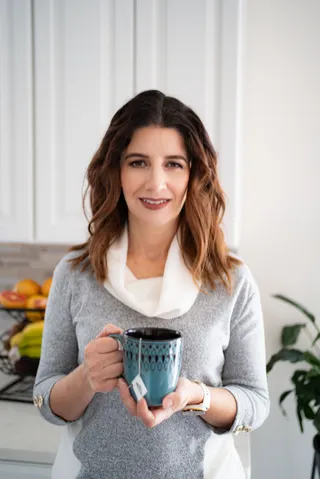
Maria Merlo is an AFMC-certified Functional Medicine Health Coach (School of Applied Functional Medicine) and Integrative Nutrition Health Coach (IIN), coaching women in English and Spanish since 2014. She is not a physician and does not diagnose or treat disease. Read Maria's story →
Frequently asked questions
How do I know if I'm in perimenopause?
It's usually recognized by changes in your cycle and symptoms in your 40s. Hormones swing so much from day to day that a single blood test can look "normal." The DUTCH test, a dried urine test, maps your estrogen, progesterone and cortisol patterns and how you clear estrogen, which can help show where you are. Your doctor can rule out other causes, like thyroid problems.
Should I take hormone therapy?
That's a decision with your doctor, based on your symptoms, history and preferences. I'll help you prepare questions for that visit, and the nutrition, sleep, stress and movement work fits alongside whatever you decide.
Why am I gaining weight around my middle?
Shifting hormones, less muscle, poorer sleep and lower insulin sensitivity all push fat toward the belly. Eating less usually backfires. Protein, strength training, sleep and blood sugar balance work better.
Is it too late if I'm already past menopause?
No. The same foundations support energy, sleep, muscle, bone and heart health after menopause too.
Do you offer hormone pellets, hormone prescriptions or GLP-1 weight-loss shots?
No. Those are medical treatments outside my scope. If you already use one, coaching works alongside it, and your prescriber manages the medication.
Do you take insurance?
We don't accept or bill health insurance. You can pay with your HSA or FSA card for programs, labs and supplements, and we can give you a superbill on request. Check with your plan to confirm what's covered.
¿Trabajas en español?
Sí, todo el programa está disponible en español. Agenda tu llamada →
Ready to feel like yourself again?
Book a free 30-minute Wellness Clarity Call. We'll talk about what's going on and the next step that makes sense for you. No pressure.
Book Your Free Wellness Clarity CallSources
- Menopause, Cleveland Clinic.
- Kuokkanen S, Santoro N. Endocrinology of the Perimenopausal Woman. Global Library of Women's Medicine, 2011.
- Greendale GA et al. Changes in body composition and weight during the menopause transition. JCI Insight, 2019.
- The 2022 Hormone Therapy Position Statement of The North American Menopause Society. Menopause, 2022.
This page is for education and is not medical advice. Talk with your healthcare provider about your diagnosis, testing and treatment.


Contact
Location: 1105 Via Corso Avenue, Suite 11, Greenville SC 29607
Phone: (864) 417-4255
Email: [email protected]